
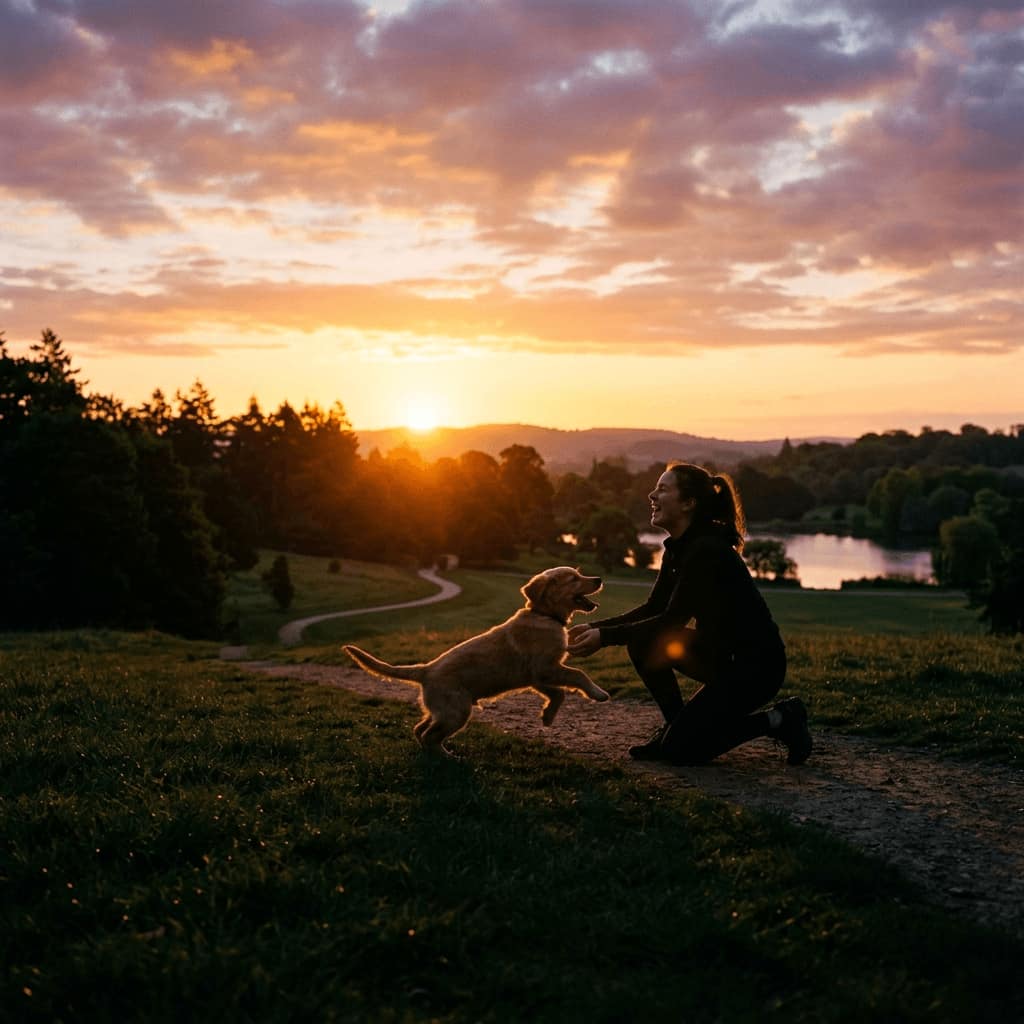
A friendlier way to raise a puppy.
Honest, practical guides written by trainers who've raised thousands of puppies. From the first night home to a calm, confident grown dog — we'll walk it with you, one small step at a time.


Latest Guides

Puppy Car Rides & Travel Training
Crash-tested restraints, motion sickness prevention, and road-trip logistics.

Muzzle Training Guide
Teaching a puppy to wear a basket muzzle calmly and even eagerly.

Littermate Syndrome
Raising two puppies at once without setting either one up to fail.
1. The History and Evolution of Guide Dogs
The profound relationship between humans and dogs dates back tens of thousands of years. However, the specialized role of the guide dog is a relatively modern marvel, born from necessity, forged through scientific advancement, and perfected through positive reinforcement.
Early Beginnings and Antiquity
While formal guide dog schools did not exist until the 20th century, evidence of dogs guiding the blind appears throughout human history. Artifacts from Roman Herculaneum, buried in 79 AD, depict a blind man being guided by a dog. Similar representations appear in 13th-century Chinese scrolls and medieval European woodcuts.
The first systematic attempt to train dogs for the blind occurred in the late 18th century. Johann Wilhelm Klein published the first manual on training guide dogs, recommending Poodles and Shepherds and introducing the concept of a rigid harness — a revolutionary idea that remains a cornerstone of guide dog equipment today.

Roman Herculaneum, 79 AD
The Catalyst of World War I
The true catalyst for the modern guide dog movement was the devastating aftermath of World War I. Thousands of soldiers returned blinded by poison gas and shrapnel. In 1916, Dr. Gerhard Stalling established the world's first formal guide dog school in Oldenburg, Germany, supplying up to 600 guide dogs annually.
The Birth of "The Seeing Eye"
In 1927, Dorothy Harrison Eustis published an article on German guide dog programs. Blind American Morris Frank wrote to her: "Thousands of blind like me abhor being dependent on others. Help me and I will help them." Together they founded "The Seeing Eye," America's first guide dog school — sparking a global movement.
The Shift in Training Methodologies
Early training relied on compulsion, choke chains, and punishment. This approach had severe limitations. Guide dogs need "Intelligent Disobedience" — the ability to refuse a command that would cause harm. Compulsion-based methods suppress the independent thinking critical for life-saving decisions.
Traditional Compulsion
- Relies on fear and punishment
- Suppresses natural curiosity
- Creates hesitant, stressed dogs
- High washout rates
Modern Positive Reinforcement
- Rewards desired behaviors
- Encourages active problem-solving
- Builds enthusiastic partnerships
- Lower washout rates
The Modern Era: Genetics Meets Neuroscience
Today, modern guide dog organizations run highly sophisticated breeding programs, selecting for behavioral traits: low reactivity, high environmental confidence, eagerness to please, and biddability. Programs utilize Early Neurological Stimulation (ENS) from days 3 to 16, permanently enhancing cardiovascular performance, immune function, and stress tolerance.
The Global Spread and Standardization
Following the success of The Seeing Eye in America and the early German schools, guide dog programs spread rapidly across the developed world. The Guide Dogs for the Blind Association was founded in the United Kingdom in 1934, initially using German Shepherds before transitioning to Labradors and Golden Retrievers for their gentler public-access temperaments. By 1950, similar programs operated in Switzerland, France, Italy, the Netherlands, Australia, and Japan. Each program developed locally adapted methodologies, but a remarkable consensus emerged on the fundamentals: positive selection for temperament, structured socialization from puppyhood, harness-based working equipment, and the indispensability of intelligent disobedience.
In 1989, the International Guide Dog Federation (IGDF) was established to formalize standards across member organizations. The IGDF accreditation process evaluates breeding ethics, training methodology, handler support services, and post-graduation care — providing handlers and donors with assurance that accredited programs meet rigorous welfare and efficacy benchmarks. Today, more than ninety organizations across thirty countries hold IGDF accreditation, collectively producing thousands of working guide teams annually.
Breed Evolution: From Shepherds to Labradors
The German Shepherd dominated early guide work for understandable reasons: intelligence, trainability, and the breed's prevalence in interwar Europe. As programs matured and shifted toward serving handlers in urban civilian environments, the limitations of working-line Shepherds became apparent. They are intense, environmentally reactive, and often demonstrate sharp protective instincts that complicate public-access work in crowded settings such as restaurants, retail stores, and transit systems.
The Labrador Retriever emerged as the gold standard during the mid-twentieth century, prized for steady temperament, food motivation that supports reward-based training, comfortable size for harness work, and a coat that handles public-access conditions well. Golden Retrievers occupy a similar niche, with slightly greater environmental softness that suits some handler personalities. Today, the Labrador-Golden cross has become the predominant breed in most guide programs, combining the best traits of both lineages while introducing hybrid vigor that reduces incidence of inherited disorders.
Technology, Data, and the Future
The last decade has seen guide dog training enter a data-driven era. Outcome databases now track every dog from birth through retirement, capturing health markers, behavioral milestones, training progression, handler satisfaction, and working career events. Statistical methods originally developed for livestock breeding — Estimated Breeding Values, mixed-model genetic analyses — are now routinely applied to working-dog selection, producing measurable year-over-year improvements in both temperament reliability and orthopedic health.
Looking forward, the field is exploring wearable sensor technology to monitor working-dog physiology in real time, machine-learning systems to accelerate behavioral analysis from training session video, and refined genomic screening that may eventually identify markers for longevity, cognitive flexibility, and resistance to specific degenerative conditions. The history of guide dogs is one of constant, careful evolution — and the next chapter promises to be the most data-rich yet, while remaining anchored in the foundational truth that began in 1916: a thoughtfully prepared dog and a well-supported handler can transform what is possible for a person living with vision loss.
2. The Science of Puppy Selection and Genetics
A successful guide dog is not made through training alone — the foundation is laid before the puppy is even born. The modern guide dog is the result of decades of meticulous selective breeding, leveraging advanced genomics and behavioral phenotyping.
Why Breed Matters: The "Big Three"
The rigorous demands of guide work require extreme predictability. A blind handler's life depends on flawless performance. Specialized breeding colonies rely almost entirely on three core breeds.

Labrador Retriever
Accounts for ~70% of guide dogs worldwide. Short coat, friendly disposition, incredibly high food drive — making them exceptionally easy to train via positive reinforcement.
Golden Retriever
Known for soft temperaments and extreme biddability (desire to please). Highly empathetic — phenomenal problem-solvers that excel with handlers who prefer a gentler pace.

German Shepherd Dog
The original guide breed. Intensely loyal, highly intelligent, strong work ethic. They bond deeply with their handler and excel in high-speed, dynamic urban environments.
Genomic Screening: Eliminating Hereditary Disease
A guide dog represents an investment of over $50,000 and two years of intensive work. Modern breeding programs employ sophisticated genomic screening to eradicate hereditary diseases.
- 1Orthopedic Health: Hip and elbow dysplasia are screened via PennHIP or OFA radiographs. Only dogs in the top percentile are permitted to reproduce.
- 2Ophthalmic Health: Annual examinations by veterinary ophthalmologists rule out Progressive Retinal Atrophy, cataracts, and retinal dysplasia.
- 3Cardiac & Neurological Health: Echo-cardiograms and DNA panels for Exercise Induced Collapse (EIC) ensure the dog can walk miles daily in varying conditions.

Estimated Breeding Values (EBVs)
Leading schools use complex algorithms to calculate EBVs, analyzing health and behavioral data of every sibling, parent, grandparent, and half-sibling. By crunching this vast pedigree matrix, geneticists predict the statistical likelihood a specific mating pair will produce successful guide dog puppies — significantly reducing washout rates over generations.
Behavioral Phenotyping: Breeding for the Mind
Behavioral traits are heritable. Breeding programs use standardized temperament tests at 7 weeks, 6 months, and 12 months, scoring on these critical axes:
Environmental Confidence
Instant recovery from startling stimuli — a dropping pan, backfiring car, metal grate.
Reactivity Threshold
The threshold at which a dog responds to triggers. Guide dogs need an exceptionally high threshold.
Biddability
Intrinsic motivation to work in partnership with a human — making cooperation naturally rewarding.
Body Sensitivity
How the dog reacts to physical touch and spatial pressure from the harness and leash.
From Litter to Lifelong Partnership
Selection doesn't stop at conception. Every puppy is monitored from birth — weight gain, reflex development, social motivation, exploratory behaviour. By weeks six and seven, structured aptitude testing identifies the puppies most likely to thrive in working roles.
Roughly twenty to thirty percent of breeding-quality litters are placed into pet or sport homes based on temperament fit. This is not failure — it is responsible matching that produces both better working dogs and happier alternative placements.

Aptitude evaluation
The Crossbreed Revolution: Labradoodles, Lab/Golden Crosses
While the three foundational breeds remain dominant, the past two decades have seen a quiet revolution in working-dog crossbreeding. The Labrador-Golden Retriever cross now accounts for a substantial percentage of working guide dogs, combining the Labrador's stable food-motivated focus with the Golden's gentler interaction style and producing measurable hybrid vigor that reduces inherited orthopedic disorder rates. Lab/Golden crosses also tend to demonstrate more consistent temperament profiles across litters than either parent breed alone, simplifying matching.
The Standard Poodle and Poodle-cross programs (Labradoodles, Goldendoodles) emerged primarily to serve handlers with allergic sensitivities to traditional retriever coats. Properly bred Poodles bring excellent intelligence, low-shedding coats, and strong working drives — though they require specialized grooming and tend to be more environmentally sensitive than Labs. The crossbred Poodle programs are still maturing, and outcome data is being carefully collected to determine whether they will reach the performance reliability of established Lab and Golden lines.
Whole-Genome Sequencing and the Genetic Frontier
As whole-genome sequencing costs continue to fall, breeding programs are integrating substantially deeper genomic data into pairing decisions. Targeted panels for known disease alleles have been standard for over a decade, but full sequencing opens new possibilities: identifying polygenic risk scores for complex traits like cognitive flexibility, longevity, and stress resilience that no single-gene test can capture.
Research collaborations between guide dog programs and veterinary genomics labs are now producing the first generation of polygenic working-dog selection tools. Early results suggest that combining traditional phenotype-based selection with whole-genome polygenic scores may yield meaningful gains in temperament reliability beyond what either approach achieves alone. This work is still maturing, but it represents the most significant methodological shift in guide dog breeding since the introduction of EBVs in the early 2000s.
Outcrossing and Maintaining Genetic Diversity
A persistent concern in any closed breeding population is loss of genetic diversity. Working-dog breeding pools are necessarily limited — only a fraction of dogs meet the rigorous health and behavioral standards required to reproduce — and over generations this can produce inbreeding effects that surface as reduced fertility, weakened immune function, or increased inherited disease incidence. Modern programs counter this through deliberate outcrossing strategies, importing breeding stock from partner programs internationally and tracking coefficient-of-inbreeding metrics across every pairing.
Some programs maintain reciprocal breeding exchanges with sister organizations in other countries, periodically importing semen or live breeding dogs from genetic lines that have been independently developed for similar working roles. The benefits are tangible: outcrossed litters tend to demonstrate hybrid vigor, with measurably lower incidence of joint disease and stronger immune profiles. The challenge is preserving the carefully cultivated temperament traits while diversifying the underlying genetics — a balancing act that requires sophisticated pedigree analysis and patient multigenerational planning.
From Selection to the First Eight Weeks
Once a litter is born, careful selection continues throughout the first eight weeks. Puppies are evaluated continuously: birth weight, weight gain trajectories, reflex development milestones, response to Early Neurological Stimulation, social motivation, exploratory behavior, and the subtle individual differences that distinguish a puppy who will likely thrive in formal training from one who may be better suited to companion life. By weeks six and seven, structured aptitude testing — the Volhard test and its modern derivatives — identifies the puppies most likely to succeed in working roles.
Not every puppy from a breeding-quality litter enters the working program. Roughly twenty to thirty percent are released to pet homes or alternative roles based on temperament fit, even when their genetics are exemplary. This is not failure; it is responsible matching. A puppy whose temperament leans toward independence and high prey drive will be happier in a sport home than in guide work, even if their parents both graduated as guide dogs. Honoring the individual puppy's profile, rather than forcing them into a role they are not suited for, produces both better working dogs and happier dogs in their alternative placements.
3. Early Socialization and Neurological Stimulation
A dog's psychological framework is largely finalized by 16 weeks old. During this fleeting critical period, the puppy's brain is highly plastic, forming millions of neural connections. For a guide dog, this phase must be meticulously orchestrated to prevent fear and build lifelong resilience.
The Neonatal Period: Days 1 to 14
For the first two weeks, puppies are blind, deaf, and entirely dependent on their mother. However, their neurological system is sensitive to tactile stimulation. Organizations employ Early Neurological Stimulation (ENS) during this window.
The 5 Steps of ENS (Days 3–16)
Each puppy is subjected to five specific micro-stressors for exactly 3–5 seconds per day:
Tactile Stimulation (Q-tip on paw)
Head Erect (held vertically, head up)
Head Down (held vertically, head down)
Supine Position (on its back)
Thermal Stimulation (cool damp towel)
Result: stronger heart, greater stress tolerance, superior disease resistance, and faster adrenal recovery in adult dogs.
The Socialization Period: Weeks 3 to 8
As eyes and ears open at week 3, puppies enter the transitional period. The puppy nursery transforms into an auditory and tactile wonderland. A "sound library" plays at gradually increasing volumes: thunderstorms, fireworks, crying babies, traffic, sirens, and vacuum cleaners. Because these sounds pair with safety and positive human interaction, puppies learn to treat them as normal background ambiance.
Tactile and Spatial Geometry
Puppies explore varying textures (wobble boards, metal grates, artificial turf, linoleum, bubble wrap) to prevent "surface fear." They climb small ramps and navigate hanging obstacles, developing exceptional spatial awareness and proprioception that pays dividends decades later in unpredictable urban environments.
Bridge Between Nursery and World
From eight weeks to roughly fourteen months, the volunteer puppy raiser serves as translator between the structured world of the breeding program and the open complexity of daily life.
The raiser is not a trainer in the formal sense — that role comes later. The raiser is the puppy's bridge to society, exposing them to every category of stimulus they will navigate as adults while preserving the calm emotional foundation built in the nursery.

The Puppy Raiser Phase: Weeks 8 to 16
At ~8 weeks, the puppy moves to a volunteer "Puppy Raiser" home for the Peak Socialization Window. The raiser's job is not to train guiding skills but to build a confident, well-mannered canine citizen. Everything the dog encounters as an adult must be introduced here — exclusively as a positive experience.
Modes of Transport
Cars, buses, trains, subways, and elevators. Settling quietly under seats.
Diverse Demographics
All ages, sizes, ethnicities; people with wheelchairs, hats, umbrellas, canes.
Public Spaces
Grocery stores, malls, restaurants, and busy streets. Ignoring food on the floor.
Navigating Fear Periods
Puppies experience fear periods around 8–10 weeks and again at 6–14 months. A single traumatic event during a fear period can cause a permanent phobia ("single-event learning"). Puppy raisers are trained to recognize subtle fear signals (lip licking, whale eye, tucked tail) and immediately remove the puppy from the situation rather than forcing them to "face their fear."
The Maternal Environment: The Silent First Trainer
Before any human ever lays hands on a puppy, the mother shapes their developing nervous system. A calm, well-cared-for dam transmits regulatory patterns to her litter through nursing rhythm, body warmth, and the subtle stress signals that puppies absorb from her behavior. Conversely, stressed mothers produce stressed litters — even when external conditions are identical. Modern breeding programs treat maternal wellbeing as a primary intervention, providing dams with quiet whelping suites, controlled visitor access, dedicated breaks from their litter, premium nutrition, and the freedom to set the pace of contact with their puppies.
The dam's role extends beyond infancy into early discipline and social calibration. Puppies who remain with their mother through at least eight weeks of age typically demonstrate better bite inhibition, more appropriate canine-to-canine communication, and stronger inhibitory control than puppies separated earlier. The mother's gentle corrections — a low growl, a controlled mouth-grab, a turn of the body — teach lessons no human can replicate. Programs that prioritize maternal contact during these foundational weeks see measurable benefits in adult behavioral outcomes years later.
Sensory Calibration: Sound, Surface, Sight
The transition from nursery to puppy raiser home is not random — it follows a carefully designed sensory exposure sequence. Auditory exposures begin softly: recorded household sounds played at low volume during nursing and rest periods, gradually intensifying as puppies' hearing matures. By week four, the soundscape includes traffic, distant sirens, children's voices, and the rhythmic patter of household activity. By week six, the volume approaches real-world levels for the environments the puppy will eventually navigate.
Surface exposure follows a similar graduated logic. Newborn puppies experience soft fleece. By week two, they encounter towel and rubber matting. Week three introduces gentle ramps and varied flooring textures. Week four adds wobble boards and balance discs. By week six, puppies confidently navigate metal grates, expanded mesh, rough concrete, polished tile, gravel, sand, and the artificial turf increasingly common in urban dog-relief areas. This deliberate texture exposure prevents the surface-aversion that limits many companion dogs from working comfortably in modern environments.
Visual exposure is the most challenging to engineer because vision develops later than other senses. Once eyes open around day fourteen, programs systematically introduce visual variety: shifting light levels, moving objects, novel shapes, mirrors (an important and surprisingly underused exposure), reflective surfaces, and the kinds of visual transitions — escalators, automatic doors, transparent partitions — that working dogs will routinely navigate.
Building Bite Inhibition and Mouth Control
A working guide dog must demonstrate exquisite mouth control — taking high-value treats gently from a handler's fingers, carrying delicate retrieve objects without damage, and refraining from picking up tempting items from the ground despite intense food motivation. This control begins in the litter, where rough mouthing earns immediate withdrawal of play from littermates and the dam. Puppies who fail to learn appropriate bite pressure in the litter rarely catch up later, which is one reason early separation is detrimental to working-dog development.
Puppy raisers continue the bite-inhibition curriculum through structured human interaction. Soft mouthing is gently redirected, hard mouthing earns immediate disengagement, and clean treat-taking is heavily rewarded. By twelve weeks, a well-raised guide candidate accepts a small treat with the precision of a surgical instrument. This skill matters not just for handler comfort but for the working partnership: a dog who mouths the harness handle, the leash, or the handler's hand introduces subtle distractions into the working communication channel.
The Puppy Raiser as Translator
From eight weeks to roughly fourteen months, the volunteer puppy raiser serves as translator between the structured world of the breeding program and the open complexity of daily life. The raiser is not a trainer in the formal sense — that role comes later. The raiser is the puppy's bridge to society, exposing them to the categories of stimuli they will navigate as adults while maintaining the calm emotional foundation built in the nursery.
Successful raisers share several characteristics: patience, consistency, a readiness to follow detailed program protocols even when intuition suggests otherwise, and the emotional maturity to invest deeply in a puppy they will eventually return. Programs invest heavily in raiser training, providing detailed curricula, regular check-in meetings, video-coaching libraries, mentor pairings with experienced raisers, and emergency support when challenges arise. The raiser-program relationship is collaborative; the best outcomes happen when both sides communicate openly about successes, struggles, and the subtle observations that shape the puppy's developing personality.
4. Advanced Training Protocols and Commands
At 14 to 18 months, the puppy returns to the training campus for formal harness work. This rigorous 4 to 6-month program transforms a well-mannered pet into a highly skilled, life-saving mobility aid.
The Harness: A Communication Conduit
The rigid harness handle is a bidirectional communication conduit. Through it, the handler feels the dog's subtle body movements — a slight shift left indicating an obstacle, a halt indicating elevation change. When the harness goes on, the dog enters "work mode," suppressing typical dog behaviors like sniffing and soliciting petting. Harness off = freedom.
Core Navigational Concepts
Walk in a straight line until told otherwise or until an obstacle impedes progress. Ignore all distractions — food, other dogs, loud noises.
Stop completely and squarely at every up-curb, down-curb, and staircase. Wait for the handler to find the edge before proceeding.
Navigate around physical barriers with "spatial clearance" — leaving enough room for the taller, wider handler to avoid side-swipes and overhanging branches.
Targeting: Finding Objectives on Command
Locating the handle or entrance to a building.
Locating an empty seat in a waiting room or bus.
Locating the pedestrian crossing button at traffic lights.
Leading the handler to a customer service desk.
The Pinnacle: Intelligent Disobedience
The single most demanding concept a guide dog must master is Intelligent Disobedience — the dog must refuse a direct command if obeying would result in injury.
Traffic checks are the ultimate test of Intelligent Disobedience.
Imagine a handler at a crosswalk. They command "Forward." But a silent electric vehicle is turning into their path. A typical dog obeys. A guide dog must override the conditioned response, firmly plant its feet, and block the handler from stepping off the curb.
Teaching this requires simulated danger in controlled environments. When the dog refuses the unsafe command and the handler praises them, the dog learns its judgment is valued and correct — building confidence to protect its handler's life.
The Blindfold Test
Before a dog can graduate, the sighted trainer must navigate a complex, unfamiliar urban route while wearing a blindfold — trusting the dog completely with their physical safety. Only dogs that pass this demanding crucible are deemed ready for Handler Matching.
Marker-Based Training and the Click-Treat Foundation
Modern advanced training is built on marker-based methodology, almost always using a clicker or a precise verbal marker like "yes" to communicate the exact moment a dog performs the correct behavior. The marker serves as a conditioned reinforcer: a sound the dog has learned, through hundreds of careful pairings, signals that food reward is imminent. This allows trainers to capture behaviors with sub-second precision — a crucial capability when teaching complex sequences where timing distinguishes success from frustration.
The science behind markers traces back to operant conditioning research from the 1940s, but modern application has refined the technique significantly. Trainers begin by establishing the marker's meaning through dozens of paired repetitions: click, treat, click, treat. Once the dog reliably orients toward the trainer at the click sound, the marker can be used to reinforce increasingly nuanced behaviors. The precision matters: marking a dog one second after they perform the correct behavior is fundamentally different from marking them at the exact moment — and the difference shows up in how quickly and reliably the behavior generalizes.
Shaping Complex Behaviors Through Successive Approximation
Guide dogs do not learn complex behaviors all at once. They learn through shaping — a technique that reinforces incremental approximations of the target behavior. Teaching a dog to "find the elevator button" begins with reinforcing any movement toward the wall where buttons are located. Then any contact with the wall. Then contact at button height. Then nose contact with any button. Then nose contact with the specific button the trainer indicated. Each step is its own micro-lesson, and the dog progresses only when the previous step is solid.
The art of shaping lies in choosing the right rate of progression. Move too quickly and the dog becomes confused; move too slowly and the dog becomes frustrated. Experienced trainers read the dog's engagement moment by moment, raising the criteria when the dog is offering the current behavior fluently and lowering them when frustration begins to show. Sessions stay short — typically eight to twelve minutes — and end on success, building the dog's confidence that training is a rewarding, achievable game.
Generalization: The Most Underrated Skill
A dog who performs a behavior perfectly in the training facility but fails to perform it in a busy supermarket has not actually learned the behavior — they have learned a context-specific approximation. True learning requires generalization: performing the behavior reliably across many environments, many handlers, many distraction levels, and many emotional states. Advanced training devotes substantial time to generalization, deliberately rehearsing behaviors in varied contexts to build the kind of robust skill working dogs need.
Generalization is broken down systematically. A behavior is first taught in a quiet training room, then rehearsed in busier facility areas, then in outdoor settings with mild distractions, then in moderately busy public spaces, then in maximum-distraction urban environments. At each stage, the criteria for success are adjusted: a dog working in a quiet room may be expected to respond on the first cue, while a dog working in a packed transit station receives more latitude initially and is then progressively required to meet the same standard. Without this structured generalization, even technically skilled dogs fail when conditions become unpredictable.
Proofing: Making Behaviors Distraction-Proof
Proofing tests the limits of a behavior under deliberately constructed challenges. A "stay" cue is proofed by gradually introducing distractions during the stay: a trainer walking past, a treat dropped nearby, another dog passing, food being eaten in front of the staying dog, and ultimately the kinds of real-world distractions a working dog will face — children running past, food vendors operating, transit announcements, sudden loud noises. A behavior that holds up across all of these proofing challenges has been truly learned.
Proofing is also where intelligent disobedience receives its most rigorous testing. Trainers rehearse hundreds of staged hazard scenarios across multiple environments, with multiple handlers giving unsafe cues, before declaring a dog ready for graduation. The proofing process surfaces individual dog tendencies that classroom training misses — a dog who handles vehicle approaches reliably but who softens around staircase hazards, for instance, needs additional targeted work before being matched with a handler whose daily life includes many staircases.
Session Design: Short, Varied, Ending on Success
The design of individual training sessions has more impact on learning outcomes than most people appreciate. Research consistently shows that short, frequent sessions outperform long, infrequent ones for canine motor and cognitive learning. The optimal session length depends on the dog and the skill being trained, but for most working dog advanced training, sessions of eight to twelve minutes with two or three sessions per day produce faster and more durable learning than longer formats.
Equally important is ending on success. A session that ends with the dog failing on the final repetition can subtly poison the dog's emotional association with that behavior. Skilled trainers always finish a session with an easy, high-success behavior — even if it means ending earlier than planned. The last thing a dog feels in a training session shapes their approach to the next session. Programs that internalize this principle see better engagement, faster progress, and lower training-stress indicators throughout the advanced training period.
5. Canine Cognition and Spatial Mapping
To truly understand how a guide dog operates, one must look beyond basic obedience and delve into the fascinating realm of canine cognitive science. Guide dogs don't just follow commands—they build complex mental maps of their environment.
The Science of Spatial Memory
When a handler and their dog walk a new route to a coffee shop, the dog isn't just following the leash. The dog is utilizing spatial memory. Unlike human navigation which relies heavily on visual landmarks and street signs, canine navigation is a multi-sensory synthesis.

Olfactory Topography
A dog's primary sense is olfaction. With up to 300 million olfactory receptors (compared to a human's 6 million), a guide dog creates an "olfactory map" of the route. They remember the scent of the bakery on the corner, the exhaust vent of a laundromat, and the damp earth near a park entrance.
This means that even in complete darkness or thick fog, a guide dog knows exactly where they are. They can often reverse a complex 2-mile route flawlessly on the first try, relying entirely on scent markers and step-counting (proprioceptive memory).
Pattern Recognition and Generalization
A major cognitive leap required of guide dogs is "generalization." In early training, a dog learns to find a specific door handle. But in the real world, door handles vary wildly—push bars, pull handles, sliding glass sensors, and revolving doors.
The "Find the Objective" Algorithm
When a handler says "Find the counter," the dog must scan the room, filter out thousands of irrelevant stimuli (people, chairs, displays), identify the architectural structure that resembles a service counter, and calculate the safest path to it without colliding with a queuing customer. This requires high-level executive function and rapid pattern recognition.
Theory of Mind in Canines
Perhaps the most astonishing cognitive ability of a guide dog is an rudimentary form of "Theory of Mind"—the ability to understand that their handler has a different perspective (or lack thereof).
Spatial Clearance
A dog can easily walk under a low-hanging tree branch. But a guide dog understands that its handler is taller. The dog calculates the handler's height and width, and will stop and refuse to proceed under the branch, communicating that the handler must find the obstacle with their hand and duck.
Gaze Tracking
Guide dogs constantly monitor their handler's body mechanics. They look at the handler's face and posture to anticipate movement. This intense cross-species attunement allows the dog and handler to move as a fluid, singular entity through crowded environments.
This immense cognitive load is why guide dogs sleep deeply when off-duty. Processing human-built environments—which are entirely unnatural to a canine—is mentally exhausting. Providing puzzle toys and decompression time allows their brains to rest and reset for the next day's navigational challenges.
Emotional Regulation Under Pressure
A working guide dog encounters stressors throughout their day that would overwhelm most pet dogs: shouting, crowds, sudden loud noises, unpredictable human behavior, the constant background tension of public spaces. What distinguishes a working dog is not the absence of stress response — they feel these stimuli — but the speed and completeness of their recovery. A well-trained guide dog may startle briefly at a sudden bus airbrake but returns to neutral working state within seconds, without lingering effects on pace, focus, or decision-making.
This emotional regulation is partly genetic — bred-for trait selection emphasizes nervous-system stability across generations — and partly the product of careful early-life conditioning. Puppies who experience graduated, predictable exposure to stress during their developmental windows build neural pathways for rapid down-regulation. The result is a working dog who can absorb the small daily insults of urban life without accumulating chronic stress, which in turn protects working career longevity and the quality of life behind the harness.
Memory: How Dogs Remember Routes, People, and Places
Canine episodic memory has been an active area of research for two decades, and the findings are remarkable. Dogs demonstrate memory for specific past events, the locations of objects across hours and days, and the identities of individual humans they have met only briefly. For guide dogs, route memory is operationally critical: after a handler walks a new route two or three times, the dog typically anticipates turns, knows where curbs lie, and identifies the destination from blocks away.
Person-recognition is equally striking. Working dogs reliably distinguish their primary handler from other humans even in crowded environments, identify family members from acquaintances based on subtle cues, and remember individuals they have met months prior. These cognitive capacities mean that the dog is not merely executing trained behaviors — they are operating from a rich, individualized memory store that informs every working decision. This is why a working partnership deepens substantially in the first year together: the dog is building a memory model of the handler's life, and the model becomes more accurate with every shared day.
Joint Attention and Reading Human Cues
One of the most remarkable cognitive capabilities of domesticated dogs is their sensitivity to human gaze, pointing, and emotional cues — a capacity that exceeds even our closest primate relatives in many experimental paradigms. Guide dogs leverage this constantly. They check in with their handler's facial expression and posture dozens of times per minute during active work, gauging satisfaction, hesitation, and decision points. A subtle handler head-turn becomes an information channel; a softening of the handler's grip on the harness transmits relaxation.
This joint-attention capacity is partly the product of forty thousand years of co-evolution between dogs and humans, and partly the result of deliberate enrichment in working-dog programs. Puppies who experience extensive eye-contact games, pointing-cue exercises, and structured shared-attention activities during development demonstrate measurably superior cue-reading as adults. Modern training programs explicitly cultivate these capacities as foundational skills, not afterthoughts.
Problem-Solving and Cognitive Flexibility
Working dogs encounter novel situations that no training curriculum could anticipate exhaustively: temporary construction barriers blocking familiar routes, broken elevators requiring stair workarounds, sudden weather events changing surface conditions, unexpected crowd dynamics around event venues. A dog who succeeds in these situations does not pattern-match to a learned solution; they problem-solve from underlying principles built during training.
Cognitive flexibility — the ability to switch strategies when the first approach fails — is therefore one of the most important traits we cultivate. Training exercises that specifically build flexibility include obstacle puzzles with multiple valid solutions, scenarios where the trained response is intentionally blocked, and graduated novel-environment exposures where the dog must apply learned principles to unfamiliar contexts. Dogs with strong cognitive flexibility prove themselves in the field by adapting calmly to surprises that rigid pattern-trained dogs find disorienting.
5. Nutrition and Healthcare for Working Dogs
A guide dog is a high-performance canine athlete. Walking miles on hard pavement, maintaining focus in overstimulating environments, and wearing a restrictive harness requires an elite nutritional foundation and proactive veterinary care.
The Working Dog Diet
A working guide dog's metabolic rate is elevated by both physical exertion and the intense cognitive load of their job. "Thinking" burns calories — the concentration required to navigate a busy city depletes glucose reserves rapidly.
High-Quality Protein
Essential for muscle repair. Working dogs require highly bioavailable sources (chicken, lamb meal) to recover from the physical strain of harness work.
Complex Carbohydrates
Provide sustained energy release. Guide dogs perform endurance work, requiring steady glucose from whole grains or sweet potatoes.
Targeted Supplements
Omega-3 (DHA/EPA) for cognitive function. Glucosamine & Chondroitin protect joints against constant impact on concrete.
Weight Management: The 4/9 Standard
Despite their high calorie burn, obesity remains a risk for food-motivated Labrador Retrievers. Guide dog organizations strictly use the Purina Body Condition System, keeping dogs at a lean "4/9" or "5/9." Handlers — who can't rely on visual cues — perform daily physical palpations to assess body condition, adjusting kibble amounts measured to the gram.
Proactive Veterinary Care
A handler's independence relies entirely on the dog's health, so vet care is intensely proactive rather than reactive. Guide dogs undergo comprehensive bi-annual exams. Because dogs are stoic and hide pain, veterinarians must perform deep orthopedic checks to detect early arthritis or ligament tears. Heartworm prevention, flea/tick control, and core vaccinations are strictly monitored.
Mental Health and "Off-Duty" Time
Guide work is highly stressful. The constant vigilance and suppression of natural behaviors can lead to burnout if not managed properly. When the harness comes off, dogs must be allowed to sniff freely, run off-leash in safe areas, play fetch, and chew toys. A dog never allowed to "just be a dog" will eventually burn out, becoming stressed and hesitant in harness — needing early retirement. The health of the partnership relies on the dog finding joy in both work and downtime.
Hydration: The Silent Performance Variable
Hydration receives far less attention than nutrition, yet it has outsize effects on working performance. Even mild dehydration — a fluid loss of two to three percent of body weight — measurably reduces cognitive performance, response time, and thermoregulation efficiency. For a working guide dog navigating a hot summer commute, this can mean the difference between accurate intelligent disobedience at a curb and a costly mistake. Handlers are taught to monitor water intake throughout the day and to offer water at scheduled rest breaks rather than only when the dog appears thirsty.
Water quality matters as well. Chlorinated municipal water can suppress intake in some sensitive dogs; filtered water often increases voluntary consumption. In summer, electrolyte supplementation may be appropriate for dogs working long outdoor shifts in heat. Veterinary nutritionists tailor hydration protocols to individual dogs, working climates, and seasonal variation — recognizing that what works in a Pacific Northwest spring will not suffice in a Texas July.
Life Stage Nutrition: From Puppyhood to Senior Years
A guide dog's nutritional needs shift dramatically across life stages, and feeding the same formula throughout a working career is a clear mistake. Growing puppies require carefully balanced calcium-to-phosphorus ratios — overfeeding either mineral during the rapid growth window can predispose the dog to orthopedic disease that manifests years later. Working adults benefit from moderate-fat, high-quality protein diets calibrated to their daily energy expenditure, with adjustments for seasonal variation in workload.
Senior working dogs, typically those in the last two years of formal service and into retirement, benefit from reduced caloric density, elevated omega-3 fatty acids for cognitive maintenance, joint-supporting supplements, and easier-to-chew kibble formulations. Body composition shifts in older dogs: muscle mass declines, fat distribution changes, and metabolic efficiency drops. Feeding plans adjusted in response to bi-annual body condition scoring help preserve quality of life well into the retirement years.
Common Health Concerns in Working Breeds
The breeds most commonly used in guide work — Labradors, Goldens, and Lab/Golden crosses — share predictable health vulnerabilities that programs and handlers must manage proactively. Hip and elbow dysplasia top the list, which is why every breeding candidate undergoes orthopedic screening before being approved for reproduction. Even with rigorous selection, environmental factors matter: rapid growth on hard surfaces, excessive jumping during the growth phase, and obesity all worsen dysplasia outcomes.
Ear infections are common in floppy-eared breeds working in humid conditions or after frequent baths. Weekly ear inspection and cleaning is standard handler care. Skin allergies and atopic dermatitis affect a subset of dogs, often manifesting in the first two years of life and requiring veterinary management throughout the working career. Hereditary cataracts and progressive retinal atrophy occur at low rates in well-screened breeding lines but are caught early by annual ophthalmic examinations. The longest-running concern is osteoarthritis, which affects most dogs by their late working years and which proactive joint support — supplements, structured conditioning, weight management — significantly delays.
Dental Health and Oral Hygiene
Dental disease is the most prevalent health condition in working dogs and the most often neglected. By age three, the majority of dogs without preventive dental care show some degree of periodontal disease. For a working dog, dental pain manifests as subtle behavioral shifts long before it becomes obviously visible: reduced willingness to take treats, slight irritability during harness adjustment, fatigue during long working sessions. Annual professional dental cleanings under anesthesia, paired with daily home brushing using canine-specific toothpaste, prevent the cascade of complications that uncontrolled periodontal disease eventually produces — including bacteremia, kidney stress, and cardiac involvement.
Conditioning, Recovery, and Working Career Longevity
A working guide dog's body absorbs years of cumulative impact: hard sidewalks, frequent stair climbs, the asymmetric pull of the harness, and the postural demands of staying at the handler's side. Conditioning programs drawn from canine sports medicine extend working careers significantly. Structured stretching, balance work on stability surfaces, core strengthening, and graduated cardiovascular conditioning protect joints, balance musculature, and sharpen proprioception. Many programs now schedule conditioning sessions as deliberately as formal training sessions.
Recovery is equally important. Working dogs need scheduled rest days, periodic spa-style sessions (warm hydrotherapy, gentle massage, range-of-motion exercises), and seasonal training-load reductions. Just as athletes periodize their training, working dogs benefit from cycling between high-demand and lower-demand periods rather than maintaining constant intensity year-round. Handlers who learn to read fatigue signals and adjust workload accordingly extend their partners' careers substantially — sometimes by years.
7. Advanced Medical Care and Orthopedics
A working guide dog operates at the physical level of an elite human athlete. The relentless pounding of paws on concrete, combined with the asymmetrical physical pressure of the guiding harness, requires sports-medicine-level veterinary oversight.
The Biomechanics of Guiding
When a dog pulls in harness, they are not walking naturally. The rigid handle transfers the human's resistance directly to the dog's left shoulder and chest (as the dog always works on the handler's left side). This creates a highly asymmetrical load over thousands of miles.
To combat this, modern guide dog organizations employ veterinary physiotherapists. Just as human athletes receive deep tissue massages and chiropractic adjustments, guide dogs undergo routine musculoskeletal assessments.
Laser Therapy
Class IV cold laser therapy is used monthly to reduce inflammation in the carpal (wrist) joints and shoulders, accelerating cellular repair without medication.
Hydrotherapy
Underwater treadmills provide high-resistance, zero-impact cardiovascular conditioning, building the core strength necessary to support the harness pull.
Acupuncture
Veterinary acupuncture is increasingly utilized to manage micro-traumas in the lumbar spine, ensuring the dog remains pain-free and eager to work.
Toxin Exposure in Urban Environments
Urban environments are fundamentally hostile to canine biology. Guide dogs walk through puddles laced with antifreeze (ethylene glycol), road salt that chemically burns paw pads, and discarded chewing gum containing xylitol (which is highly toxic to dogs).
Handlers are taught emergency decontamination protocols. Protective booties are mandatory during extreme winter weather to prevent chemical burns from de-icing salts, and in extreme summer heat to prevent second-degree burns from asphalt (which can reach 140°F on a 90°F day).

The "Stoic Dog" Dilemma
Because guide dogs are bred for extreme environmental resilience, they have incredibly high pain tolerances. A normal pet dog might limp dramatically if it has a minor pebble in its paw. A guide dog will often continue pulling in harness with a fractured toe, masking the pain to complete its job. Handlers must be hyper-vigilant, relying on subtle cues (a slight head bob, a reluctance to sit) to detect medical issues before they become catastrophic.
Dietary Science
Nutrition is treated as preventative medicine. Guide dogs are typically fed highly engineered prescription diets formulated for working dogs. These diets are carefully balanced to maintain a lean body condition score of 4/9. Every extra pound of fat puts exponentially more strain on the dog's hips and elbows. Handlers weigh food to the gram, ensuring caloric intake perfectly matches the dog's daily mileage.
Annual Diagnostic Imaging and Orthopedic Surveillance
Working guide dogs receive annual orthopedic imaging — typically including hip, elbow, and lumbar spine radiographs — beginning in early working life. The purpose is not waiting for symptoms but actively surveilling for subclinical changes that signal the early stages of degenerative joint disease. By identifying early arthritic changes, slight ligament laxity, or initial spondylosis years before clinical lameness develops, veterinary teams can adjust workload, introduce protective supplementation, and prescribe targeted physical therapy that significantly delays disease progression.
Some programs are now incorporating advanced imaging modalities into routine surveillance: MRI for suspected soft-tissue concerns, ultrasound for tendon and ligament evaluation, and CT scanning for complex orthopedic cases. While these modalities remain expensive, their cost is small compared to the cost of losing a fully trained working dog to a preventable musculoskeletal condition. Programs with comprehensive imaging surveillance report significantly longer working career durations than programs relying on symptom-driven veterinary care alone.
Rehabilitative Physical Therapy
The field of canine rehabilitative medicine has matured remarkably over the past decade, and guide dog programs have been among the earliest adopters. Working dogs now routinely receive physical therapy interventions modeled on those used for human athletes: underwater treadmill conditioning, therapeutic ultrasound, laser therapy, range-of-motion exercises, and structured therapeutic exercise programs. These interventions accelerate recovery from injury, prevent compensatory injuries that develop when dogs adjust gait to protect a sore area, and maintain peak conditioning throughout long working careers.
Hydrotherapy in particular has become a standard part of working-dog conditioning. Underwater treadmill sessions allow controlled cardiovascular conditioning with minimal joint impact, ideal for dogs in recovery from minor injuries or those entering their senior working years. Dogs typically enjoy hydrotherapy sessions once acclimated, and the regular sessions also provide structured opportunities to monitor gait, balance, and stamina over time.
Emergency Preparedness for Handlers
Handlers receive structured training in canine first aid and emergency response. The curriculum covers wound assessment and basic dressing, recognizing signs of bloat (a life-threatening condition in deep-chested breeds), heatstroke management, choking response, and the warning signs of common emergent conditions that require immediate veterinary attention. Programs supply each graduating handler with a basic canine first-aid kit and recommend they maintain refresher training every few years.
Equally important is emergency planning: identifying the nearest twenty-four-hour veterinary emergency facility along regular routes, maintaining current vaccination and medical records accessible during travel, and establishing communication protocols with the program's veterinary team for second opinions on serious issues. Handlers who have rehearsed emergency response find that genuine emergencies, while still stressful, are navigable rather than overwhelming.
Mental Health and the Veterinary Behaviorist Role
Working dog welfare is not purely physical. Many programs now include veterinary behaviorists — veterinarians with specialty training in behavioral medicine — as part of the standard care team. These specialists assess dogs whose performance suggests underlying behavioral or emotional concerns: subtle work refusals, growing anxiety patterns, displacement behaviors during sessions, or atypical responses to specific stimuli. They differentiate between training gaps (which respond to revised training) and underlying behavioral health concerns (which may require medical intervention).
When pharmacological support is appropriate — for cases involving severe noise phobia, separation distress that has not responded to behavioral protocols, or other conditions affecting working welfare — veterinary behaviorists prescribe and monitor medication regimens. The use of behavioral medication in working dogs remains relatively rare but is no longer taboo; when properly indicated and supervised, these treatments can preserve working careers and substantially improve quality of life for affected dogs.
6. The Matching Process: Handler and Dog
A fully trained guide dog is a highly sophisticated living mobility tool. Handing it over to a visually impaired person is not the end — it's the beginning of the most delicate phase: The Match. A mismatch is detrimental to both, which is why matching is treated as an exact science.

The Alchemy of the Match
Trainers spend weeks deeply understanding each dog's individual quirks, walking speeds, physical strength (the "pull" in harness), and emotional needs. Simultaneously, they analyze prospective handlers' applications.
The most critical physical factor is pace and pull. A fast-walking, 6-foot handler in Manhattan needs a large, fast-paced dog. If given a gentle, slow-paced Golden Retriever, the handler constantly steps on the dog's heels — causing immense stress and ruining the partnership.
Psychological Synergy
Beyond physical metrics, psychological synergy is vital. Some dogs are highly sensitive, requiring soft, encouraging verbal cues. Others are more independent, requiring a firm, confident handler voice with strict boundaries. Lifestyle also dictates the match — a high-energy dog suits a college student navigating crowded campuses, while a calmer dog suits someone working from home.
Class Training: Transferring the Reins
Once matched, the handler travels to the guide dog campus for a rigorous 2 to 3-week residential "Class Training" program. They learn:
- Harness Mechanics: Holding the handle, reading body language through the rigid bar, and leash corrections.
- Spatial Awareness: Judging distance and direction using the dog's positioning.
- Canine Husbandry: Grooming, feeding, and basic first aid.
- Route Building: Teaching the dog a brand-new route to a specific destination.
The moment of graduation is profoundly emotional. For the handler, it represents a massive leap in independence, confidence, and safety. For the dog, it is the culmination of two years of genetic engineering, socialization, and intense training. They leave the campus as a unified team, ready to navigate the world together.
The Application & Interview Phase
Long before a match is even contemplated, prospective handlers undergo a multi-month application process. Detailed questionnaires capture daily routines, transit patterns, work environments, social context, mobility goals, and personal preferences. Trainers conduct in-home or video-tour visits to evaluate the physical setting where the team will live: stairs, flooring surfaces, room layouts, outdoor terrain, and proximity to public transit. A handler living in a quiet rural setting has fundamentally different needs from a handler navigating the dense streets and subway systems of a major city, and matching cannot ignore these realities.
The interview phase also assesses readiness. Handlers must demonstrate the physical capability to manage a working dog safely, the emotional bandwidth to commit to the partnership, the financial stability to provide ongoing veterinary care, and the support network necessary if challenges arise. We never reject a candidate based on disability severity, age, or lifestyle — but we are honest about whether a particular handler's circumstances suit a working guide dog at this moment in their life. For some candidates, a different mobility solution or a delayed application is the kinder recommendation.
Trainer Intuition Meets Algorithmic Matching
While matching draws on extensive data — pace measurements, pull strength, environmental sensitivity profiles, and behavioral scoring — the final decision incorporates substantial trainer intuition. A senior trainer who has lived alongside a particular dog for months understands subtleties no spreadsheet captures: the way a dog softens when approached by anxious strangers, the small head-turn that signals a need for reassurance, the particular pace they settle into when working calmly versus when working under pressure. This embodied knowledge complements the quantitative profile and often decides between two candidates that look equivalent on paper.
Increasingly, programs deploy algorithmic matching tools to surface candidate pairings, but the algorithm functions as a recommendation engine, not a decision-maker. A matching committee of trainers, behaviorists, and the dog's primary handler-in-training reviews proposed matches and either confirms, modifies, or postpones them. Postponement is far more common than people expect. Roughly fifteen percent of initial match proposals are revised after closer evaluation, and that revision rate is a feature, not a bug — it indicates the matching system is genuinely scrutinizing fit rather than rubber-stamping the algorithmic suggestion.
Common Mismatches and How We Avoid Them
Twenty-five years of outcome data have identified recurring mismatch patterns. The most damaging is the pace mismatch: a fast-walking handler paired with a slower dog (or vice versa) creates daily friction that erodes the partnership over months. We measure pace explicitly during handler intake and dog assessment, and we treat a substantial mismatch as a hard veto regardless of how appealing the pairing looks otherwise. A second common mismatch is environmental sensitivity: a dog with low tolerance for loud, chaotic settings paired with a handler who commutes through urban transit produces chronic stress that no amount of training fully resolves.
The third pattern, less obvious but equally consequential, is interaction style. Some handlers communicate primarily through firm, confident verbal cues; others lean into soft, encouraging interaction. Some dogs respond best to one style, others to the opposite. Mismatching here produces a partnership in which the dog underperforms not because they lack skills, but because the communication channel is poorly tuned. We assess interaction style explicitly during the two-week residential immersion and have terminated proposed matches at that stage when the channel clearly did not develop.
After Graduation: The First Year Together
Graduation is not the finish line. The first year working together is when the partnership truly forms. Subtle communication patterns emerge that no classroom training can fully prepare. The dog learns the specific routes the handler walks daily — the bus stop, the coffee shop, the office entrance — and begins to anticipate them. The handler learns to read tiny shifts in the dog's harness pressure that indicate hesitation, focus, or alert. The team develops a vocabulary, a rhythm, a shared map of the world that grows richer every week.
Programs support this critical first year intensively. Most accredited organizations conduct follow-up visits at one month, three months, six months, and twelve months post-graduation. These visits assess working performance, identify subtle problems before they become entrenched, refresh handler skills, and ensure the dog's welfare is being protected. Many partnerships develop small habits in the early months that, if uncorrected, become significant issues by year two: a handler who consistently rewards the dog at the wrong moment, a dog who develops a slight habit of veering toward food vendors, a pattern of working sessions that are too long or too short. Early intervention preserves the long-term partnership.
Successor Dogs and Lifetime Partnerships
A successful first partnership often leads to a lifetime relationship with the program. Many handlers work with three or four successive dogs over their lifetime, each matched with the cumulative knowledge of what worked — and what didn't — with the dog before. Successor matching is generally faster and more accurate than initial matching, because both the handler and the program have learned together. The bond a handler develops with their guide dog program over decades becomes one of the most enduring relationships in their life.
9. Service Dog Laws and Public Access Rights
The independence provided by a guide dog is only made possible through robust legal frameworks. Handlers must constantly advocate for their rights, as public misunderstandings regarding service animals remain frustratingly common.
The Americans with Disabilities Act (ADA)
In the United States, the ADA defines a service animal specifically as a dog (and in rare cases, a miniature horse) that has been individually trained to do work or perform tasks for an individual with a disability.
Under Title II and Title III of the ADA, service animals are legally permitted to accompany individuals with disabilities in all areas where members of the public are normally allowed to go. This includes:
The "Two Questions" Rule
Business owners often struggle to distinguish between a legitimate guide dog and a poorly behaved pet attempting to pass as an Emotional Support Animal (ESA). Legally, business staff may only ask two specific questions:
Is the dog a service animal required because of a disability?
What work or task has the dog been trained to perform?
What Businesses CANNOT Ask:
- They cannot ask about the person's disability.
- They cannot require medical documentation.
- They cannot require a special identification card or training documentation.
- They cannot ask that the dog demonstrate its ability to perform the task.
Service Dogs vs. Emotional Support Animals (ESAs)
It is critical to distinguish between service animals and ESAs. Emotional Support Animals provide comfort just by being present. Because they have not been trained to perform a specific job or task, they do not qualify as service animals under the ADA. Therefore, ESAs do not have legal public access rights to enter restaurants, stores, or non-pet-friendly businesses.
When a Service Dog Can Be Excluded
Public access rights are not absolute. A business has the legal right to ask a handler to remove their service dog if:
- The dog is out of control and the handler does not take effective action to control it (e.g., repeated barking in a theater).
- The dog is not housebroken.
Note: Allergies or fear of dogs are explicitly NOT valid reasons for denying access or refusing service to people using service animals. In such scenarios, the business must accommodate both parties (e.g., seating them in different areas of the restaurant).
International Frameworks: Comparing ADA to Global Equivalents
While the ADA sets the United States standard, similar legislative frameworks exist worldwide. The United Kingdom's Equality Act 2010 provides comparable public-access protections for assistance dog handlers, with the additional requirement that businesses make reasonable adjustments to accommodate disability — a slightly broader obligation than the ADA's. Australia's Disability Discrimination Act 1992 and Canada's various provincial Human Rights Codes establish parallel protections, with the Canadian framework varying somewhat by province in scope and enforcement.
The European Union has been moving toward harmonization through the European Accessibility Act, though implementation varies substantially across member states. In Asia, Japan's Act on Assistance Dogs for Physically Disabled Persons explicitly protects access in public facilities and large workplaces, while many other Asian jurisdictions are still developing comprehensive frameworks. Handlers traveling internationally should research destination-country requirements carefully, as documentation expectations, quarantine considerations, and legal protections vary widely.
The Documentation Question
A persistent source of confusion is whether handlers can or should carry documentation proving their dog's service status. Under the ADA, no documentation is required — and businesses asking for it are violating federal law. However, many handlers carry voluntary documentation anyway: a program-issued identification card, a copy of relevant ADA language, and a card explaining the two permissible questions and the answers. This documentation does not grant legal access (which already exists by right), but it can defuse uncomfortable conversations and accelerate access in venues with poorly trained staff.
Internationally, the situation differs. Some jurisdictions require formal certification through accredited programs, and many handlers traveling abroad carry documentation that satisfies the most stringent destination-country requirements as a precaution. Major guide dog organizations maintain reciprocal documentation recognition agreements that simplify international travel for their graduates.
Reporting and Enforcing Access Violations
When access denials occur, handlers have multiple recourse pathways. The first is direct: a calm, informed conversation with the business owner or manager, often referencing specific ADA language. Many denials resolve at this stage once staff understand the legal framework. When direct resolution fails, handlers can file complaints with the U.S. Department of Justice's Civil Rights Division, which investigates ADA violations and can compel compliance through formal agreements or, in serious cases, litigation.
State and local agencies also handle disability access complaints, often with faster response times than federal channels. Some major rideshare and retail companies maintain dedicated accessibility complaint channels with rapid internal escalation processes. Documentation matters: handlers who maintain detailed incident records (date, time, location, individuals involved, exactly what was said) substantially strengthen any complaint they pursue. Guide dog programs frequently provide template documentation forms and peer support for handlers navigating their first serious access dispute.
Housing, Employment, and Beyond Public Access
The legal framework extends beyond restaurants and retail. The Fair Housing Act provides separate protections for assistance animals in housing contexts, including in housing that otherwise prohibits pets. Handlers cannot be charged pet deposits or fees for their service dog, though they remain liable for any actual damage the dog causes. Employers must allow service dogs in workplaces under the ADA's reasonable accommodation provisions, with narrow exceptions for situations involving direct safety threats or fundamental alteration of job duties.
Air travel falls under separate federal regulation through the Air Carrier Access Act. Recent regulatory changes have tightened documentation requirements for service animals on flights and significantly restricted emotional support animal access, but trained service dogs retain robust protections. Handlers traveling by air should familiarize themselves with current carrier-specific requirements and arrive prepared with the documentation airlines now request.
7. Life as a Working Guide Dog & Retirement
A guide dog typically works for 6 to 8 years. During this time, they are the constant companion, navigator, and protector of their handler — flying in airplane cabins, sleeping under corporate desks, and navigating the chaotic symphony of modern urban life.
The Daily Routine
A working dog's day is highly structured. The day begins with feeding and "relieving" — a strict protocol where the dog is taught to eliminate on command in specific areas. When the harness lifts off the hook, the dog undergoes a visible psychological shift: posture stiffens, ears pivot forward, "work mode" engaged. They make hundreds of micro-decisions throughout the day: judging an awning's height, pacing through moving crowds, halting at subway platform edges.
Public Interference
The greatest challenge is often not traffic but well-meaning pedestrians. When someone pets, distracts, or feeds a working guide dog, they actively endanger the blind handler. A distracted dog may miss a curb or veer into the street. The universally recognized "Do Not Pet" patch on the harness is the handler's first line of defense.
The Importance of Play
When the handler returns home and removes the harness, the dog is officially "off the clock." Running, playing fetch, and seeking affection is not optional — it is mandatory. A clear delineation between work and play prevents mental fatigue. A dog that fully decompresses every evening will enthusiastically embrace the harness again each morning.
Recognizing the Signs of Retirement
Around age 8 to 10, most guide dogs begin to slow down. Recognizing when it's time to retire is one of the most painful but necessary responsibilities of the handler.
- Physical slowing: No longer maintains a brisk pace, or hesitates at stairs.
- Increased startle response: Spooked by noises previously ignored.
- Reluctance to harness: Hides or avoids eye contact when the harness appears.
- Medical conditions: Onset of arthritis, vision loss (cataracts), or cognitive decline.
The Transition to Pet Life
Retiring a guide dog is an emotional severing of a profound partnership. The handler is suddenly reliant on a white cane while waiting for a successor. The retired dog transitions to a life of leisure — sleeping in the sun, chasing tennis balls, and resting. If the handler can't care for two dogs, the retired dog is adopted by a trusted family member, close friend, or their original puppy raiser. Every retired guide dog is guaranteed a loving, comfortable home.
They spent their lives as the eyes of their human. In retirement, they are honored as the heroes they always were.
Workplace Integration and Office Etiquette
For working-age handlers, the office environment is one of the most consistent settings their guide dog will occupy. A typical office day may involve eight or more hours of the dog resting quietly beside or beneath the handler's desk, occasional movement between meeting rooms, navigation of building security checkpoints, and routine use of elevators and stairwells. Workplaces that have hosted a guide dog before generally adapt smoothly; first-time host workplaces benefit substantially from a brief orientation conducted by the handler or the placing program.
The Americans with Disabilities Act and equivalent international legislation guarantee guide dogs access to nearly all workplaces, with very narrow exceptions involving fundamental alteration of job duties or direct safety threats. Even so, handlers often invest in proactive workplace education: a short presentation to colleagues explaining "do not pet, do not feed, do not distract" norms, designated relief areas outdoors, and a clear policy for handling well-intentioned but inappropriate interactions. Most colleagues, once informed, become reliable allies who help reinforce appropriate behavior with newer staff and visitors.
Air Travel: The Hardest Working Environment
Air travel ranks among the most demanding scenarios a working guide dog encounters. The dog must navigate crowded terminals, security screening, jet bridges, and confined cabin floors for extended hours, often under conditions of cabin temperature variability, recycled air, and unpredictable schedule disruptions. Guide dogs are trained to tuck compactly into the foot space under the handler's seat — a position most can sustain for several hours but which becomes uncomfortable on long-haul flights.
Experienced handlers manage air travel with deliberate preparation: pre-flight relief breaks immediately before boarding, water management to prevent the need for in-flight relief, careful seat selection (bulkhead or window seats with clear floor space), and recovery time scheduled into the arrival day to allow the dog to decompress. International travel adds complexity: documentation requirements, quarantine considerations in some destination countries, and varying rules around guide dog access in countries less familiar with assistance animal partnerships. Most accredited programs offer travel-planning support for handlers undertaking unfamiliar international itineraries.
Public Access Challenges: The Reality on the Ground
The single most common challenge handlers report is not traffic, infrastructure, or training gaps — it is human behavior. Despite clear legal protections, many handlers experience access denials at restaurants, hotels, rideshare services, hospitals, and retail establishments. Most denials reflect ignorance rather than malice: a manager who has confused service dogs with emotional support animals, a rideshare driver who does not know their company's policy, a hospital staff member who has not been trained on assistance animal access in clinical settings.
Skilled handlers carry concise educational materials and know the relevant legal framework cold. They escalate calmly when necessary, document incidents meticulously, and when appropriate report repeated violators to regulatory authorities or company headquarters. Programs increasingly provide handlers with template communications, legal aid referrals, and peer support networks for navigating the most challenging access incidents. Slow, patient public education has, over the decades, measurably reduced access friction — but progress remains uneven, and a handler's emotional resilience matters as much as their dog's training.
Succession Planning and the Grief of Retirement
Most handlers begin thinking about their next dog roughly two years before their current dog's anticipated retirement. This long lead time accomplishes two important things. First, it allows the program to begin the matching process unhurriedly, which historically produces better outcomes than rushed last-minute matching. Second, it gives the handler emotional space to process the coming transition without superimposing it on the immediate stress of retirement.
The grief of retiring a working guide dog is genuine and substantial. The dog has been the handler's daily partner for nearly a decade — companion, navigator, social bridge, and constant presence. Even when the retirement decision is medically obvious and the dog goes to a beloved home, the loss of the working partnership is profound. Many handlers describe the transition period — typically two to four months between the previous dog's retirement and the new dog's placement — as the loneliest months of their adult life. Programs support handlers through this period with peer connection, scheduled check-ins, and explicit acknowledgment that grief is a normal and healthy response to losing a working partnership.
The Retired Dog's Second Life
Retirement, viewed from the dog's perspective, is a transition rather than an ending. Most guide dogs adapt quickly to pet life, embracing the freedom from harness duty and the abundance of sleep, play, and casual affection that retirement allows. Some grieve briefly — particularly dogs who remain in close proximity to their former handler and observe the new guide dog stepping into their former role. Programs and adopting families manage this thoughtfully, providing extra attention, gentle routine, and clear delineation between the retired dog's domain and the working dog's responsibilities.
Many retired dogs go on to second careers as therapy or facility dogs in lower-stress contexts: hospital visits, library reading programs, hospice companionship. Others simply enjoy a well-earned retirement of slow walks, friendly neighborhood greetings, comfortable beds, and the company of their adopting family. Every retired working dog deserves and receives a retirement that honors the years of service they provided — and the bond they formed with their handler does not end at retirement. Many handlers visit their retired dogs regularly, and these reunions are often emotionally powerful for both.
11. Succession Planning: The Handler's Hardest Transition
The lifespan of a working partnership is agonizingly shorter than the human lifespan. A visually impaired person who gets their first guide dog at age 20 will likely need six to eight different dogs throughout their life. The process of retiring one dog and bonding with a successor is known as "Succession Planning."
The Psychological Weight of Retirement
When a guide dog retires, the handler experiences a profound sense of loss, akin to grief. For nearly a decade, this dog has been literally tethered to them—sleeping by their bed, walking them to work, keeping them safe from traffic. The sudden absence of the dog's physical weight on the harness handle is often described as feeling "amputated."
Furthermore, the handler must temporarily return to using a white cane while waiting for a successor. This sudden drop in walking speed and independence can be emotionally devastating, reinforcing the urgency of a smooth succession plan.
The Three Phases of Succession
The Application and Wait
Handlers must reapply for a successor dog before their current dog fully retires. Because the school already knows the handler's pace, pull, and lifestyle, they can prioritize matching them with a new dog quickly, minimizing the time spent relying solely on a cane.
The Two-Dog Household Dilemma
If the handler keeps their retired dog as a pet while bringing home the successor, complex pack dynamics emerge. The retired dog may try to block the young dog from the harness out of habit or jealousy. Handlers must strictly enforce boundaries, clearly communicating that the young dog is now the working alpha.
Rebuilding Trust
A handler trusts their retired dog with their life implicitly. The young successor dog is a stranger. The handler must fight the urge to compare the young, inexperienced dog to the seasoned veteran they just retired. Rebuilding that life-or-death trust from scratch takes six to twelve months of daily effort.
The "Ghost Pull" Phenomenon
Many handlers report experiencing the "Ghost Pull" during the first few weeks with a successor dog. Because they have spent 8 years reacting to the specific muscular pull and gait of their retired dog, their muscle memory is hardwired to that specific animal.
A new dog will have a slightly different cadence, a different turning radius, and a different way of stopping at curbs. Handlers often find themselves unconsciously correcting the new dog simply because the dog feels "different" through the harness, not because the dog is making a mistake. Trainers must carefully coach handlers to "wipe the slate clean" physically and mentally.
The Ultimate Act of Love
Despite the emotional toll of saying goodbye to multiple dogs over a lifetime, handlers willingly endure the heartbreak over and over again. The profound freedom, speed, confidence, and unconditional love provided by these extraordinary animals makes the inevitable pain of succession not just bearable, but deeply worthwhile. Every successor dog stands on the shoulders of the dog that came before it.
Estate Planning for the Working Dog
A subject few handlers want to discuss, but every responsible handler eventually does, is what happens to the working dog if the handler experiences a serious health event or passes away during the working partnership. This is not morbid planning — it is responsible stewardship of an animal who has dedicated their life to the handler's wellbeing. Formal estate planning for the dog typically involves designating a primary caretaker in the handler's will, identifying a backup caretaker, allocating funds for the dog's continued care, and notifying the placing program of these arrangements so they can support the transition if needed.
Programs frequently maintain emergency response protocols for situations where a handler is hospitalized or otherwise unable to care for their dog. These protocols may include emergency boarding with trained staff, transport coordination, and short-term re-housing while longer-term arrangements are made. Handlers who discuss these contingencies openly with family members, close friends, and their placing program create resilience that protects both themselves and their working partner from worst-case disruptions.
When a Partnership Must End Early
Most working partnerships proceed to natural retirement after eight to ten years of successful service, but occasionally circumstances dictate earlier termination. A dog may develop a medical condition that prevents continued work. A handler's life circumstances may shift in ways that no longer support working dog care. Rarely, despite every effort, a partnership simply does not develop the necessary trust and cooperation. In each of these situations, programs handle the transition with the same care they applied to the original matching.
Early-retired dogs are placed in suitable homes through the same priority sequence as standard retirement: handler retention if feasible, family or friend adoption, raiser return, or program-coordinated adoption. Handlers who experience early partnership termination receive priority placement on the successor waiting list and substantial support through what is often a deeply painful transition. Programs treat these situations as data — examining what went wrong, whether systemic improvements are possible, and how to better support handlers facing unexpected partnership changes.
Multi-Dog Households During Succession
When a handler retains their retired dog and welcomes a successor, the household becomes a multi-dog environment with specific management considerations. The retired dog and the new working dog must coexist peacefully, and the retired dog must accept that they are no longer the primary mobility partner. Most retired dogs adjust within a few weeks, but the transition requires deliberate management: separate feeding stations, clear delineation of working versus pet space, individual attention time for each dog, and patience as the dogs establish their new relationship.
The successor dog also benefits from careful introduction. Working dogs in training have been exposed to other dogs throughout their development, but living full-time with a senior retiree in their first weeks of placement adds a new dimension to the partnership. Skilled handlers and supportive programs ease this transition by maintaining strong routines, providing structured exercise and decompression time for both dogs, and intervening early if any signs of tension emerge between the new pair.
A Lifetime With Working Dogs
By the time a handler retires from active working partnership — typically when age, health, or life circumstances make a successor dog impractical — they have often shared their adult life with four or five different guide dogs. Each dog leaves an imprint. Some are remembered for boundless confidence on crowded streets, others for gentle interaction during difficult emotional periods, others for the particular routes they mastered with unforgettable precision. Together, these dogs constitute a parallel autobiography of the handler's life, marked not by years but by partnerships.
The cumulative impact of decades of working partnerships extends far beyond the individual handler. Each generation of working dogs informs the next, both literally through breeding lines and figuratively through accumulated program knowledge. Every handler who completes a successful working career contributes to a vast collective wisdom that shapes how future handlers are trained and supported. Succession planning, viewed at this scale, is not just personal — it is the way the entire community of working dogs and handlers passes forward what has been learned, generation by generation, in the long and remarkable project of building partnerships between humans and dogs.
Frequently Asked Questions
Answers to common questions about puppy training, guide dog development, and early socialization.
When should I start training my puppy?
You can begin basic training as soon as your puppy comes home, typically around 8 weeks of age. Early socialization and foundational commands like 'sit' and 'potty training' should start immediately.
How long does it take to train a guide dog?
Professional guide dog training typically takes about 18 to 24 months. The first year focuses on socialization and obedience with a puppy raiser, followed by 4-6 months of intensive formal training with a professional instructor.
What are the best breeds for guide dog training?
Labrador Retrievers, Golden Retrievers, and crosses between the two are the most common and successful breeds for guide dog work due to their intelligence, eagerness to please, and appropriate size.
How do I stop my puppy from biting?
Puppy biting (mouthing) is normal behavior. Redirect their biting to an appropriate chew toy. If they bite you, say a firm 'No' or 'Ouch', stop playing, and ignore them for a few moments to teach bite inhibition.
Is positive reinforcement the best way to train?
Yes, positive reinforcement is universally recommended by veterinary behaviorists. Rewarding good behavior with treats, praise, or play is highly effective and builds a strong, trusting bond between you and your puppy.